Changing Nutritional Needs throughout Life

Age affects our nutritional needs. Sometimes the differences are obvious. It is easy to see the difference in the amount and types of food an infant, school-age child, teenager, and adult need. Other differences are more subtle. You may not realize that, as you get older, your calorie needs decrease, especially if you become less active. Being aware of such...

Smoking’s Damaging Effects on Your Body

In addition to the addictive drug nicotine, the other principal harmful substances in cigarettes are tar and carbon monoxide. Tar is a sticky, brown residue that collects in the lungs. Primarily made up of chemicals known as hydrocarbons, tar is a powerful cancer-causing agent that has been linked to the development of lung cancer. Carbon monoxide is...

The Dangers of Anabolic Steroids

Professional and amateur athletes sometimes use supplements or drugs to improve their physical performance. Anabolic steroids are probably the most well-known performance-enhancing drugs, and the most dangerous. These synthetic drugs imitate the effects of the male hormone testosterone. The drugs have approved medical uses, but athletes use them to make their muscles bulkier and stronger.

The Different Types of Exercise

There are different types of exercise, and each type has different effects on your body. Some types of exercise improve flexibility and muscle strength. Others use the large muscles in your body to build heart strength. Still others increase endurance. Exercises fall into three categories—aerobic, strength conditioning, and flexibility. Which type is best...

Hair Color Treatments for a Sensitive Scalp

Wanting to cover those grey strands or simply want to change your hair color for a different look? Think again. Studies about hair color treatments reveal that 5% of frequent hair dye users are bound to have sensitive scalp or develop allergies in the long run. However, those who already have sensitive skin will see and feel negative effects as soon as harsh chemicals in hair color touch their scalp. These effects are redness, burning sensation, dryness and itch, and usually caused by the following ingredients: 1. Harsh Chemicals in Hair Dye A...

Showing posts with label Alcohol n Drugs. Show all posts

Thursday, June 14, 2012

Addictive Gambling


Compulsive gambling is an addiction, like alcohol dependence or other drug addiction. Because no physical substance is ingested, gambling has been called the purest form of addiction. Although it is strictly psychological, the uncontrollable impulse to gamble can become overwhelming and eventually cause major
disruption in a person’s life—including loss of job, financial ruin, a broken home, criminal activity, and loss of self-respect and the respect of others. Many people have the potential to become addicted to gambling. The term “problem gambling” includes but is not limited to the condition known as compulsive gambling. Gambling, like other addictions, is a progressive illness that cannot be cured, only kept under control. The growth and popularity of state lotteries, as well as gambling casinos on America’s rivers and lakes (and land-based casinos in some states), has made gambling easily available. Horse racing, dog racing, and private illegal gambling operations attract many additional gamblers. You may be addicted to gambling if five (or more) of the following factors apply to you:
• being preoccupied with gambling (such as reliving past gambling experiences, planning the next gambling venture, thinking of ways to get money for gambling, or fantasizing about how to spend the money once you win)
• wanting to gamble with increasing amounts of money to achieve the desired level of excitement
• trying repeatedly, but unsuccessfully, to control, cut back on, or stop gambling
• being restless or irritable when attempting to cut down on or stop gambling
• using gambling as a way of escaping problems or of relieving feelings of helplessness, guilt, anxiety, or depression
• returning another day to get even after losing money gambling
• lying to family members, a therapist, or others to conceal the extent of your involvement with gambling
• committing illegal acts such as forgery, fraud, theft, or embezzlement to finance your gambling
• losing a significant relationship, job, or educational or career opportunity because of gambling

• relying on others to provide money to relieve a desperate financial situation caused by gambling Many addicted gamblers have the following personality traits:
• An inability or an unwillingness to accept reality. This attitude can lead them to escape into the world of gambling.
• Emotional insecurity. A compulsive gambler finds that he or she is most emotionally comfortable when gambling.
• Immaturity. Many gamblers seem to have a hard time accepting responsibility. They want to have all the good things in life without any great effort on their part.

If you think you may have a problem with gambling, talk to your doctor. He or she may be able to refer you to a mental health professional who can help you overcome your addiction. For more information, contact the National Council on Problem Gambling, Inc. (800-522-4700) or Gamblers Anonymous (213-386-8789) or consult your local telephone directory.

How to Quit Alcohol, Drugs and Smoking


If you are a smoker, kicking the habit could be the single most important thing you do for your health and your family’s health. It’s not easy, but millions of people have quit smoking on their own. Many programs are now available to help. The American Cancer Society (800-227-2345) and the American Lung Association (800-LUNG-USA) offer excellent support resources and information for those who want to quit on their own. You can also check your Yellow Pages for listings of other smoking treatment programs and support groups. Most successful stop-smoking programs suggest that you tackle the job in three stages: preparation, quitting, and reinforcement. The following tips will help you prepare to quit smoking:

• Choose a target date to quit, such as a birthday or an anniversary, and stick to it.
• Make a list of reasons for quitting, and review it carefully.
• Note your smoking habits and routines; plan activities that would disrupt them.
• Condition yourself physically: start a modest exercise program, drink more fluids, and get plenty of rest.
• Think of alternative activities to do when the urge to smoke is strong.
• Go public with your intentions to quit, and gain the support of friends and family.
• If possible, get someone to quit with you. The following tips will help you quit smoking:
• Don’t be discouraged by the thought of never smoking again; think one day at a time.
• Clean your clothes to rid them of the cigarette smell.
• Get rid of all cigarettes, ashtrays, and lighters at home, in your car, and in your office at work.

• On the day you quit, keep busy: go to a movie, exercise, take long walks, buy yourself a treat, or do something special to celebrate.
• Visit the dentist and have your teeth cleaned.
• The first few weeks, spend as much free time as possible in places where smoking is not allowed.
• Avoid alcohol, coffee, and other beverages associated with smoking, but drink large quantities of water and fruit juice. Once you have successfully quit smoking, here are some tips for helping you stay away from cigarettes:
• Keep healthy substitutes handy, such as carrots, sunflower seeds, raisins, or sugarless gum.
• Learn how to relax quickly and deeply: make yourself limp; visualize a soothing, pleasing situation; and get away from it all for a moment.
• Participate in activities that make it hard to smoke such as jogging or swimming.
• Do things that keep your hands busy such as crossword puzzles or gardening; while watching television, play with a paper clip, a pencil, or a rubber ball.
• Stretch a lot.
• Pay attention to your appearance.
• Never allow yourself to think that “one cigarette won’t hurt.”
• Get up from the dinner table as soon as you’re finished eating and brush your teeth.
• If you are concerned about gaining weight, join an exercise group, plan menus carefully, and weigh yourself weekly; don’t try to lose weight, just try to maintain your acquitting weight. Keep in mind that the benefits of giving up cigarettes far outweigh the drawbacks of gaining a few pounds. Most smokers successfully quit only after several attempts. You may be lucky enough to quit on your first try, but if not, don’t give up. Try again. A number of products are now available to help break the smoking habit. These include nicotine patches, nicotine gum, nicotine inhalers, and drugs such as ibuprofen hydrochloride. The patches and gum provide a low dose of nicotine that can be used to wean your body off the drug. Ibuprofen hydrochloride is a nicotine-free pill that can help reduce your urge to smoke. Other approaches to quitting smoking include hypnosis, acupuncture, behavior modification, and meditation. Your physician can give you more information on smoking cessation programs and products.

Illegal Drugs

In addition to the physical and social problems caused by dependence on drugs such as alcohol, people who become dependent on an illegal substance risk penalties for violating drug control laws and their personal safety when procuring drugs. Those who use underutilized needles also risk exposure to HIV, hepatitis,

and other sexually transmitted diseases that are transmitted through contaminated blood. More than other addictive substances, illegal drugs are a powerful force behind criminal activity that destroys families and neighborhoods, and overwhelms prisons. If you feel you are unable to stop using illegal drugs on your own, you will need professional help to quit. Although quitting is something only you can do, it is not likely that you can quit by yourself. Talk to your doctor, or call your local hospital or clinic to ask about their drug treatment programs. 

Cocaine 

Whether sniffed as a powder, injected as a liquid, or smoked (freebasing), cocaine acts as both a stimulant and a local anesthetic, producing a rush of euphoria and energy. Its effects wear off quickly, often leading users to take another dose in a short time. Cocaine is derived from the leaves of the South American coca bush. Crack cocaine, the purest form of the substance, is especially lethal because its effects are more intense and can lead to cardiac arrest. The euphoria caused by cocaine use is intense but short-lived and usually followed by depression as the drug wears off. The drug causes the coronary arteries to constrict, boosting blood pressure and, with it, the risk of heart attack, stroke, and seizures. Regular use of cocaine often causes nervousness, insomnia, inability to concentrate, fatigue, depression, or anxiety; some people become aggressive, violent, or paranoid. Side effects include nausea and vomiting, bleeding of mucous membranes, and cold sweats. Cocaine also can cause hallucinations, abnormal heart rhythm, coma, and death. A very ill person who is dependent on cocaine may need to be hospitalized. All people who are addicted to cocaine should seek counseling and rehabilitation to overcome their addiction. 

Club Drugs 

So-called club drugs such as ecstasy, rohypnol, GHB, and ketamine are synthetic drugs made in illegal production facilities. These drugs are being used increasingly by teens and young adults as part of a nightlife scene at nightclubs, bars, and “raves.” Many young people experiment with a variety of these drugs together. Combining any of these drugs with alcohol can lead to severe reactions and death. Ecstasy comes in pill form and also can be inhaled or injected. The effects of ecstasy are similar to those of amphetamines and cocaine. Psychological effects include confusion, depression, sleep problems, severe anxiety, and paranoia. Physical effects include muscle tension, involuntary teeth clenching, nausea, blurred vision, faintness, and chills or sweating. Use of the drug is associated with increases in heart rate and blood pressure. Ecstacy also has been linked to long-term damage to those parts of the brain that are critical to thought, memory, and pleasure. Rohypnol, GHB, and ketamine depress the central nervous system, inducing a state of dazed relaxation. They have been implicated in cases of date rape; because they are often colorless, tasteless, and odorless, they can be slipped easily into an unsuspecting victim’s drink. Rohypnol can be fatal when mixed with alcohol or other depressants. Abuse of GHB can produce withdrawal effects such as insomnia, anxiety, tremors, and sweating, and can cause coma and seizures, especially when combined with ecstacy. Sometimes ketamine is used as an alternative to cocaine and usually is snorted.  

Heroin 

Heroin is an opiate, which means it comes from the opium poppy. Like other opiates, it can be eaten, inhaled, smoked, or injected. Because the body quickly builds up a tolerance to heroin, users can become addicted rapidly. The euphoric and tranquilizing effects of heroin come at a high price: regular use can lead to kidney dysfunction, pneumonia, lung abscesses, and brain disorders, depending on how the drug is taken. Those who inject the drug also risk skin abscesses, phlebitis (inflammation of a vein, often accompanied by formation of a blood clot), scarring, hepatitis, and HIV infection. The drug methadone, itself addictive but much less so than heroin, is often used to treat heroin addiction; the person may need to take it for the rest of his or her life. Methadone treatment is usually given on an outpatient basis under a physician’s supervision.


Marijuana 

The most widely used illegal drug is marijuana, made from the leaves of the hemp plant. The drug is typically smoked in joints (cigarettes). People use marijuana to feel good and to relax. The drug can cause a distorted sense of time and a reduced ability to think and communicate clearly. Other side effects can include problems with depth perception and short-term memory, impaired motor abilities, bloodshot eyes, dry mouth, and with chronic use paranoia, panic, and hallucinations. Like cigarette smoke, marijuana smoke impairs the lung’s defenses against infection and can lead to bronchitis and emphysema. Smoking marijuana may pose even more of a cancer danger than cigarettes because marijuana smoke contains more of a potent cancer-causing substance than tobacco smoke and because people who smoke marijuana inhale the smoke more deeply into their lungs. Heavy, long-term use of marijuana can cause a psychological addiction that can lead to loss of energy, ambition, and drive. People who are psychologically addicted to marijuana tend to have difficulty dealing with normal, everyday stress.

LSD 

Lysergic acid diethylamide (LSD) is a powerful hallucinogen that induces a wide range of psychological effects, which can be enjoyable, terrifying, or both. “Bad trips” can cause paranoia and panic, but even ordinary episodes of LSD use can involve:
• depressed appetite
• loss of sexual desire
• distorted perceptions
• difficulty communicating
• feelings of paralysis
• hyperactivity
• dilated pupils
• increased heart rate and blood pressure
• sleeplessness
• tremors
In whatever form it is taken (blotter paper, sugar cubes, gelatin squares, or small tablets) the effects of LSD are unpredictable, in part because it is impossible to know the exact dose you are getting and in part because the effects are influenced by the user’s personality and mood. A single dose of LSD can last for 12 to 18 hours, and many users experience flashbacks recurring memories of some aspects of their experiences using the drug for up to a year. LSD is not considered to be addictive but, like addictive drugs, LSD can produce
tolerance, which causes people who use the drug regularly to take increasingly higher doses to get the same effects. In susceptible people, LSD use may contribute to the development of mental disorders such as schizophrenia and severe depression.


Wednesday, June 13, 2012

Physiological Effects of Smoking


Scientists now understand the details of how and why smoking is able to exert so many different negative effects on many parts of the body. The smoke from a lighted cigarette contains a mixture of more than 3,000 different substances that are dangerous to living tissue. In addition, tobacco products contain hundreds of chemical additives used as flavors and fillers. No federal agency currently has the authority to require the tobacco industry to reveal the names of these additives, or to remove them from tobacco products if they are found to be harmful. These substances in cigarettes include tars, nicotine, and gases such as carbon monoxide, nitrogen oxide, and hydrogen cyanide. Together, these substances interact to create a huge number of different chemical compounds that have harmful effects on the body. Tobacco tar is made up of hundreds of chemicals that have been shown to cause cancer. Nicotine is the addictive substance in tobacco. The signs of addiction include tolerance (the need to take larger doses to produce the same effects), physical dependence, continued use despite known harmful effects, euphoric effects, relapses following drug abstinence, and recurrent drug cravings. Nicotine is inhaled, along with tars and carbon monoxide, in tobacco smoke. Nicotine in smokeless tobacco is absorbed through the mucous membranes in the mouth (chewing tobacco) or the nose (snuff). Nicotine acts primarily on the nervous system, often causing an increased heart rate and elevated blood pressure. Nearly 90 percent of the nicotine found in cigarettes is inhaled and absorbed into the bloodstream. In addition to its effects on the respiratory system and the gastrointestinal system, nicotine also affects the brain, the spinal cord, and the peripheral nervous system. Nicotine can stimulate, then depress, the production of saliva, constrict the air passages in the lungs, and increase cholesterol levels in the bloodstream. Carbon monoxide is a deadly gas that is a by-product of burning tobacco. It is the same pollutant that is found in automobile exhaust. Carbon monoxide is deadly because it displaces the oxygen molecules in red blood cells, making oxygen less available to your muscles, brain, heart, and other organs. It also damages the lining of arteries, causing atherosclerosis (the buildup of fatty deposits called plaque in the inner lining of the arteries that supply blood to the heart). As a result, the heart must pump harder to deliver an adequate supply of oxygen to the cells. Smokeless Tobacco Smokeless (chewing) tobacco has been making a gradual resurgence in the United States for the past 20 years. Advertisers have presented smokeless tobacco as a healthier alternative to smoking, using the macho image of tobacco-chewing cowboys and athletes to promote their products. Apparently these advertisements have been effective, as indicated by an increase of 52 percent in sales of smokeless tobacco since 1978. It is estimated that 7 million to 11 million Americans, mostly males, use smokeless tobacco. Smokeless tobacco comes in three forms: loose leaf, plugs, and snuff. Chewing tobacco may be packaged as loose-leaf tobacco, which is sold in a pouch. The user places the tobacco between the cheek and the gum, and when a certain amount of tobacco juice and saliva are accumulated in the mouth, it is spit out. Chewing tobacco also can be found as plug tobacco, which is a solid brick form of tobacco. The user cuts off a piece with a knife and chews it, and again, spits it out. Snuff is a finely ground tobacco, sold in cans, that is put on the back of the hand and sniffed through the nose. It also can be placed between the cheek and

the gum. Despite its macho appeal to men, few women find tobacco chewing attractive. Users of smokeless tobacco may not experience the effects of carbon monoxide, but the substance has plenty of other harmful effects, including:
• damage to the soft and hard tissues in the mouth
• excessive abrasion of tooth surfaces
• presence of nitrosonornicotine, a cancer-causing agent
• increase in heart rate and blood pressure
• development of leukoplakia, a disease that results in thick, white patches on the cheek, tongue, and other parts of the mouth
• cancer of the inner lining of the cheek
• suppressed immune response
• increase in the number of dental cavities
• inflammation of the gums
• cancers of the pharynx, esophagus, bladder, and pancreas
• darkened teeth and bad breath


Secondhand Smoke Breathing in smoke from someone else’s tobacco presents a significant risk to a nonsmoker’s health. Exposure to so-called secondhand smoke (sometimes referred to as passive smoking) is a significant cause of heart disease, stroke, lung cancer, and respiratory problems such as bronchitis. Two different types of smoke enter the air when a person smokes: exhaled smoke and the smoke that comes directly from the burning tobacco. This second, more dangerous type of smoke is what hovers in the air in smoke-filled rooms. Secondhand smoke is especially harmful to infants and young children. Smoking by parents is known to worsen asthma in children and even to trigger asthma attacks. Children without asthma whose parents smoke have far more respiratory illnesses coughs, colds, middle ear infections, pneumonia, and bronchitis than children of nonsmokers.


Alcohol and Other Drugs


Dependence on alcohol and other drugs, also called addiction, poses a triple threat to the dependent person and to society as a whole. It increases the probability that a person will do something potentially harmful, such as acting in a violent or careless manner. It leads to impaired judgment that affects certain everyday activities, such as driving a car, thereby increasing the risk of injury or death. And it creates chemical imbalances in the brain and the body that increase the risk of illness and death. Nicotine, the drug found in cigarettes and other tobacco products, is extremely addictive.

Drug Dependence

A person who uses a drug for other than a recommended or prescribed purpose is said to be abusing that drug. Drug dependence (or addiction) is an uncontrollable craving for a particular substance, which can, in some cases, take over a person’s life. A person who is psychologically dependent on a drug experiences emotional distress when the drug is withdrawn. Physical dependence means that the body has adapted to the presence of the drug, causing symptoms of withdrawal when deprived of it. Drugs that can cause addiction fall into three general categories: those that depress the central nervous system, those that stimulate the central nervous system, and those that produce hallucinations and also affect the central nervous system.

Drugs That Depress the Central Nervous System 

A person who is addicted to a drug that depresses the central nervous system is both psychologically and
physically dependent.
• Examples are opiates such as codeine, heroin, and morphine; barbiturates; alcohol; and antianxiety drugs.

• Short-term effects include euphoria, relief from pain, and prevention of withdrawal symptoms.
• Long-term effects include depression, malnutrition, constipation, and, when injected from a contaminated needle, an increased risk of infection with HIV or hepatitis B.
• Withdrawal symptoms for opiates include weakness, sweating, and chills, progressing to vomiting, diarrhea, and sometimes cardiac collapse, which can be fatal. Withdrawal symptoms for barbiturates and antianxiety drugs include tremor, anxiety, restlessness, and weakness, sometimes progressing to hallucinations and seizures. Withdrawal symptoms for alcohol include trembling hands, sweating, nausea, and, in some cases, cramps and vomiting. Other severe withdrawal symptoms for alcohol may include confusion, hallucinations,
and seizures.

Drugs That Stimulate the Central Nervous System 

Tolerance builds up quickly with drugs that stimulate the central nervous system, which means that a person must take increasingly large doses to achieve the same effects.
• Examples are cocaine and amphetamines.
• Short-term effects include excitation, sleeplessness, hyperactivity, and euphoria.
• Long-term effects include hallucinations, delusions, and depression.
• Withdrawal symptoms include severe depression, sleeplessness, mood swings, headaches, muscle pain, apathy, and drug cravings that may last up to a year. Drugs That Produce Hallucinations Hallucinogens do not produce physical dependence, so there are no withdrawal symptoms, but they may produce psychological dependence and genetic damage.
• Examples are LSD and mescaline.
• Short-term effects include exhilaration, sensory distortion, illusions, paranoia, and panic.
• Long-term effects include flashbacks. Some people are more susceptible than others to drug dependence for reasons that may include both genetic and environmental factors. Heavy use of any addictive drug may encourage the use of other drugs; adolescents who use alcohol, tobacco, or marijuana are more likely than their peers who don’t use these drugs to use cocaine or heroin eventually. In general, the younger people are
when they start and the more types of drugs they use, the greater their risk of addiction. People start taking a drug for a variety of reasons. They may be having problems coping with a difficult situation, such as divorce or unemployment. They may be bored or curious or under pressure to conform to the behavior patterns of their peers. Most do not realize that they are risking becoming dependent on the drug. Dependence not only causes physical problems such as lung and heart disease from tobacco smoking and liver disease from drinking excessive amounts of alcohol, but it also contributes substantially to the breakdown of families, to unemployment, and—in some cases—to crime. Effective treatment for drug dependence consists of both physical detoxification and mental and social rehabilitation. Detoxification, or withdrawal of the drug gradually over a period of a week to 10 days, is usually done in a controlled setting such as a hospital, where the person’s physical symptoms can be treated. Sometimes a less harmful drug with similar effects is substituted, such as methadone for heroin. Formal rehabilitation programs, which may include therapeutic communities and may use self-help groups such as Narcotics Anonymous or Alcoholics Anonymous, have been shown to greatly increase a person’s chances of staying off drugs permanently.


Alcohol

Alcohol is the most commonly used drug in the United States. Nearly 14 million Americans are dependent on it or have other problems associated with drinking. These problems cost the nation more than $100 billion annually in medical care and lost productivity. Alcohol accounts for one of every 20 deaths and one of every four hospital stays. Nearly 60 percent of all violent acts—including murders, child abuse, family abuse, and other felonies—are associated with the consumption of alcohol. Alcohol dependence is a chronic disease characterized by a tendency to drink more than was intended, unsuccessful attempts to stop drinking, and continued drinking in the face of adverse consequences. Moderate drinking—two drinks a day for men—has been found to have health benefits. Statistically, moderate drinkers live longer than both nondrinkers and heavy drinkers, reflecting alcohol’s ability to reduce some of the risks associated with heart attack, stroke, and diabetes. For example, alcohol lowers low-density lipoprotein (LDL), the “bad” cholesterol, and elevates high-density lipoprotein (HDL), the “good” cholesterol that protects against clogged arteries. Alcohol also helps prevent the formation of blood clots and increases estrogen production in postmenopausal women. Many people, however, find it impossible to drink in moderation. If you have questions about the benefits versus the risks of having one or two drinks a day, talk to your physician.

Alcohol’s Effects on the Brain 

Alcohol exerts its effects by altering the function of different chemical messengers (neurotransmitters) in the brain. The initial effects of alcohol are to mildly sedate the brain: the drinker becomes a little less inhibited and anxious. The second and third drinks affect the brain’s pleasure center, located in the lower midbrain, producing an emotional high. The pleasure center evolved in all animals to ensure survival. Although the mechanism is not fully understood, sex, eating, and other behaviors that enhance evolutionary adaptation and survival produce pleasurable feelings that make people want to repeat those behaviors again and again. Sensory inputs and thoughts are sorted out by the pleasure center in the brain and tagged as being good (pleasurable) or bad (hurtful or unimportant). Good things are remembered, unimportant things forgotten, and bad things feared. This is one of the ways we learn, but it is also the process that underlies addiction to alcohol and, very likely, other drugs. Once rewarded for something, such as alcohol intake, with an emotional high, we want to do it again. Alcohol does not affect all people in the same way. Genetic differences may account for variations in the way the pleasure center responds to alcohol. There is, however, no single “alcoholism gene.” Most likely, many genes are involved in a person’s response to alcohol, and these genes interact in different combinations with environmental influences, such as peer pressure and the availability of alcohol. As the genetic contribution to alcohol becomes better understood, it may be possible to test for genetic susceptibility to alcoholism. Men are four times more likely than women to become dependent on alcohol. As with other addictions, those who cannot stop drinking eventually have difficulty maintaining personal relationships and taking care of themselves. People who are dependent on alcohol often fail to eat properly or get adequate rest, which can lead to serious health problems.

Codependence

Family members and friends who act in ways that allow a person to continue to misuse alcohol or other drugs are considered to be codependents or enablers. These people often make excuses for the addicted person’s behavior, such as calling in sick to work for him or her, to hide the problem from others. A person who is codependent may plead with a loved one to stop using alcohol or other drugs but rarely does anything else to help the person change the harmful behavior. The best thing family and friends can do is to encourage the person who is addicted not only to stop taking drugs but also to enter a treatment program. Threats to withdraw regular contact or support, combined with professional intervention or counseling, may be the only way to persuade him or her to seek help.

Prevention and Treatment

The following steps can help prevent the development of alcohol dependence:
• Limit your drinking to no more than two drinks a day.
• Drink slowly; do not have more than one drink per hour.
• Never drink to relieve anxiety, tension, or depression, or on an empty stomach.
• Do not feel embarrassed for refusing an alcoholic drink at a social occasion. No single form of treatment works for everyone who is dependent on alcohol. Several different approaches may be used, often in combination:

• Psychological treatment usually involves psychotherapy on a one-on-one or family basis, or is carried out in groups using a variety of talk therapies.
• Social treatments often address problems at work and include family members in the treatment process.
• Physical treatment, needed by some people who are dependent on alcohol, may use a deterrent drug such as disulfiram to sensitize the person to alcohol. The drug causes extremely unpleasant symptoms when a person drinks, so that he or she eventually becomes reluctant to do so.
• Self-help organizations such as Alcoholics Anonymous (AA) are a particularly helpful form of support for people who are trying to quit drinking. Some people require medical help in getting through physical withdrawal when they stop drinking. This process of detoxification, which takes 4 to 7 days, is usually followed by long-term treatment.


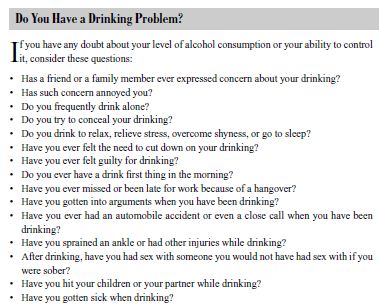
If you answered yes to any of these questions, you may be addicted to alcohol. If you think that you—or someone you love—has a drinking problem, seek help immediately. Stopping now will significantly improve your life and your health, no matter how long you have been drinking. Here is how you can get help:

• Ask your doctor for the name of a healthcare professional who specializes in treatment for alcohol dependency.
• Call the employee assistance program where you work.
• Call nearby hospitals or a local mental health center to ask if they provide a program for alcohol addiction.
• Call the local chapter of AA, a support group of alcoholics who meet regularly to help each other stop drinking and stay sober.
• If you are concerned about the drinking of a family member or a friend, call the local chapter of Al-Anon, a support group for relatives and friends of alcoholics.

Tobacco

Smoking, directly and indirectly, causes more death and illness in the United States than any other single activity. Each year, more than 300,000 Americans die of smoking-related illnesses, including lung cancer, emphysema, and heart disease. Although the incidence of smoking among men has declined to about 32 percent from its peak of 54 percent in the mid-1950s, smoking remains one of the most difficult habits to kick. Much of what is known today about the harmful effects of tobacco was learned from medical studies of the effects of cigarette smoking on the lungs. The effects of smoke from cigars and pipes are also dangerous,
although in somewhat different ways.


Harmful Effects of Smoking 

The risk of developing lung cancer is 10 times greater for cigarette smokers than for nonsmokers. Decades of study in many countries have shown a direct link between smoking and lung cancer. Since cigar and pipe smokers do not inhale as much tobacco smoke, they have a slightly lower risk of lung cancer, but the risk is still significantly higher than it is for nonsmokers. Tar and nicotine, as well as smoke, play a role in the development of lung cancer. The risks for lung cancer increase proportionately with the number of cigarettes smoked, the length of time the person has smoked, the age at which the person started smoking, and the amount of smoke inhaled. Other types of cancer caused by cigarette smoking include cancers of the throat, esophagus, bladder, kidney, pancreas, and mouth. Pipe and cigar smokers also have an increased risk for cancers of the lip and mouth. Since some of the tars in tobacco are swallowed, there is also an increased risk of stomach cancer. Respiratory diseases associated with smoking include chronic bronchitis, sinusitis, and emphysema. Each year in the United States, these diseases account for tens of thousands of deaths from respiratory failure. Cigarette smoking slows down the action of the cilia, tiny hairlike projections that line the airways and help clean the lungs. When the cilia are immobilized, dust and dirt particles are able to invade the lungs and cause inflammation. As a result, cigarette smokers also have more chronic coughs, phlegm production, wheezing, and other respi-ratory symptoms. People with allergies and asthma are particularly vulnerable to the negative effects of cigarette smoke. For men, the most significant health hazard of smoking is coronary artery disease—the most common cause of death in men in the United States. A young man who smokes 20 cigarettes a day is three times more likely than a nonsmoker to develop coronary artery disease. The risk increases proportionately with the number of cigarettes smoked. Smokers have been shown to have severe and extensive narrowing of their coronary arteries, the vessels that deliver blood to the heart muscle. They also have higher blood levels of LDL (low-density lipoprotein), the “bad” cholesterol, and are more likely to have high blood pressure. Smoking lowers the threshold for the onset of angina, chest pain associated with heart disease, and is a major risk factor for peripheral vascular disease, which affects the arteries of the legs, causing painful neuropathy (degeneration of the nerve endings). Smoking also affects the arteries leading to the brain, thereby increasing the risk for stroke.

Related Posts Plugin for WordPress, Blogger...
Twitter Delicious Facebook Digg Stumbleupon Favorites More